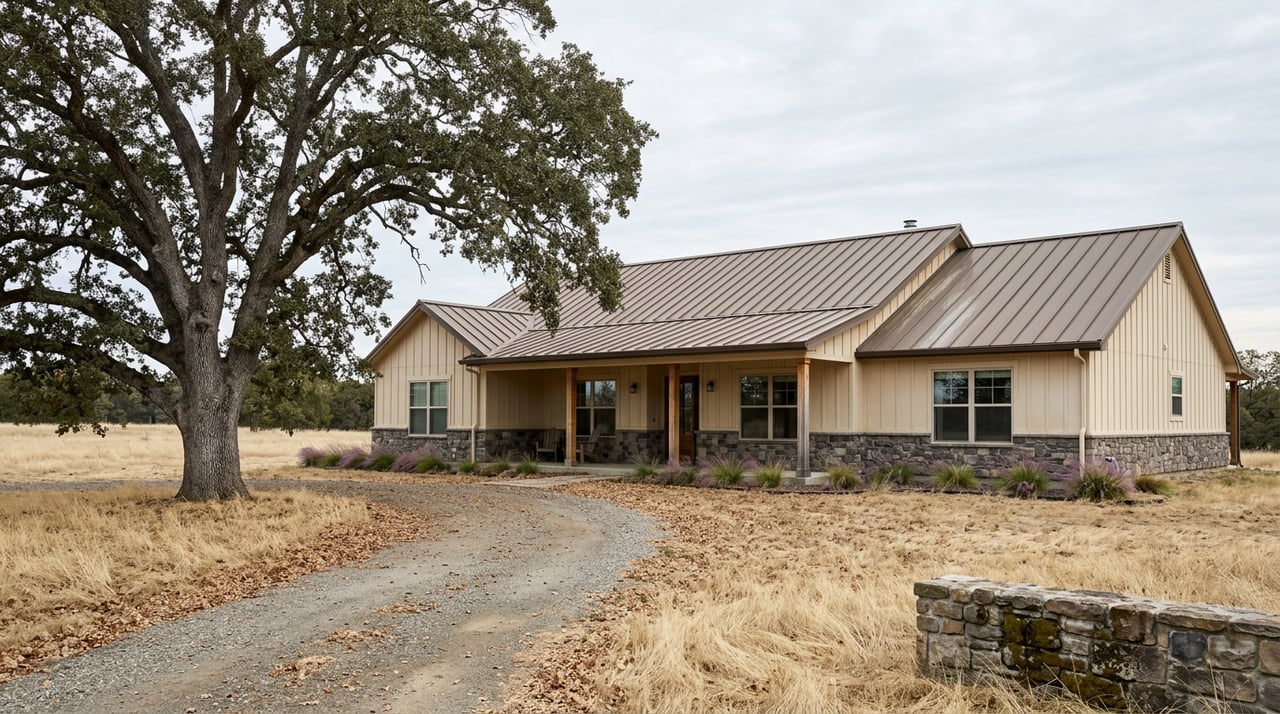
Picture two parcels of pasture, both roughly 40 acres, both listed at close to the same price per acre. One sits just outside Wheatland, inside Yuba County. The other sits ten minutes west, across the county line into Sutter County. A buyer comparing the two spreadsheets assumes the carrying costs will land in the same neighborhood too. They won't, and the reason has nothing to do with soil quality, water rights, or road frontage. It comes down to the program.
The California Board of Equalization describes the Williamson Act as California's 1965 law that lets landowners trade a ten-year promise to keep land in agricultural use for a property tax bill based on farming income instead of market value. Sutter County has long enrolled ag land under Williamson Act contracts. According to the California Department of Conservation, Yuba is one of only four counties statewide, alongside Del Norte, San Francisco, and Inyo, that has no Williamson Act contracts on the books.
What that actually changes on the ground
If you've shopped for acreage anywhere else in the Central Valley or the Sierra foothills, you've probably run into Williamson Act language in disclosures without thinking much about it. Land under contract gets assessed at its agricultural value rather than what a developer might pay for it, and the tax savings can run anywhere from 20 to 75 percent depending on the parcel, according to the Department of Conservation's own figures. According to Kassouni Law, in exchange, the owner is locked into that ten-year rolling contract. Get out early and the county can charge a cancellation penalty. File a notice of non-renewal instead and the tax benefit phases out over roughly nine years while the assessment climbs back toward market rate.
None of that machinery exists for land inside Yuba County. There's no contract to inherit when you buy, no restricted valuation to lose if you change how the land is used, and no cancellation fee waiting if your plans shift from grazing cattle to something else down the road.
Yuba County Planning Director Wendy Hartman put the trade-off plainly in a 2014 interview with the Appeal-Democrat, explaining that even though local ag land doesn't qualify for the tax breaks, the absence of a contract gives farmers more room to accept a development offer if one comes along, since they're not bound by a Williamson Act agreement the way landowners in neighboring counties are.
That's the piece most land-shopping guides skip. Non-participation isn't a missed opportunity. It's a different deal entirely, and which side of that deal works better depends on what the buyer actually wants from the land.
What the same trade-off looks like next door
Sutter County leaned hard into the program for decades. In the years just before the state stopped reimbursing counties for the lost tax revenue in 2010, Sutter had roughly 144 Williamson Act contracts covering close to 64,000 acres, according to an Appeal-Democrat report at the time. Even after the state pulled its subvention payments, county officials chose to keep honoring existing contracts rather than let farmers absorb a sudden tax jump. That decision came from Sutter County supervisors weighing the cost against the risk of losing agricultural land to development, a debate the county's own leadership discussed openly in an Appeal-Democrat report.
The result is a genuine fork at the county line.
Here's how the two sides actually compare:
| Yuba County (includes Wheatland) | Sutter County | |
|---|---|---|
| Williamson Act contracts | None. County never adopted the program | Long-standing contracts, tens of thousands of acres historically enrolled |
| Tax basis on qualifying ag land | Standard assessed value, no ag-use discount available | Reduced valuation based on agricultural income for enrolled parcels |
| Development flexibility | No contract restriction. Owner can change use without a cancellation fee | Contracted land is bound by a rolling ten-year term with a cancellation penalty for early exit |
What this means if you're pricing land near Wheatland
If you're cross-shopping acreage between Wheatland and points across the Sutter or Placer County lines, the per-acre asking price is only part of the comparison. The tax line is where the two markets actually diverge.
A few things worth checking before you write an offer on Yuba County acreage:
- Confirm with the Yuba County Assessor's Office that the parcel carries no leftover ag-preserve designation. Confirming costs nothing and rules out surprises.
- Don't assume a lower sticker price on Yuba land reflects a lighter tax burden. Without a Williamson Act discount in play, the assessed value tends to track closer to market value than it would on enrolled land next door.
- If you're comparing total carrying cost rather than list price, factor in local rate stacking too. Yuba County's median effective property tax rate currently runs around 1.23 percent, a touch above the statewide median of 1.21 percent, and that rate varies block by block depending on school bonds and special districts. Plumas Lake, still inside Yuba County, carries the county's highest sub-rate at roughly 1.52 percent because of the Mello-Roos and special assessment layers built into that community. Land near Wheatland won't automatically carry that same load, but it's a reminder that county-wide averages hide real variation.
- If your long-term plan involves flexibility, subdividing later, selling to a builder, or simply not wanting a ten-year use commitment attached to the deed, land outside the Williamson Act system may actually suit you better than a contracted parcel with strings attached.
- If you already hold land under a Williamson Act contract elsewhere and are considering a move toward Wheatland, understand you're trading a locked-in tax discount for a cleaner, unrestricted parcel. That's a real trade, not a downgrade, but it should factor into how you compare offers.
None of this makes one county a better place to buy ranch or ag land than the other. It means the two markets run on different mechanics, and a buyer who assumes uniform treatment across county lines is comparing numbers that don't measure the same thing.
A few questions this tends to raise
Does this mean land near Wheatland is always cheaper to hold long-term than similar land in Sutter County? Not automatically. Without the Williamson Act discount, Yuba County ag land is taxed closer to standard assessed value, but the total bill still depends on the specific tax rate area, school bonds, and any special district assessments layered on top. A parcel in a lower-overhead part of the county can carry less burden than a Williamson Act parcel next door, and the reverse is also true.
If I'm selling ranch land near Wheatland, does the lack of a Williamson Act contract help or hurt my listing? It depends on the buyer. A buyer focused purely on minimizing near-term tax exposure may prefer contracted land elsewhere. A buyer who wants a clean parcel with no long-term use restriction and no cancellation penalty hanging over a future decision may see the absence of a contract as the more attractive position.
Comparing acreage across county lines takes more than a per-acre number and a good view. If you're weighing land near Wheatland against something in Sutter or Placer County, or you already own ground here and want a clear read on what it actually costs to hold, Taylor Zapata has spent years walking these parcels and the paperwork behind them. Let's Connect and figure out what the numbers actually mean for your plans.
This article is general information, not legal, tax or financial advice. Consult a qualified professional about your situation.